
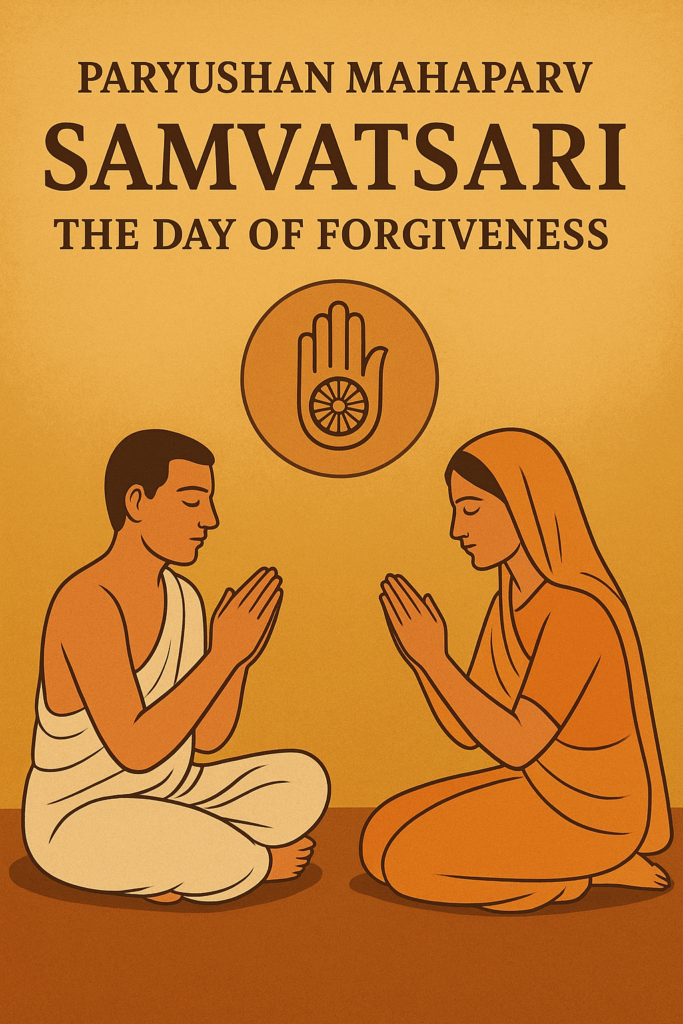
“The weak can never forgive. Forgiveness is the attribute of the strong.”
Among the eight sacred days of Paryushan Mahaparv, the eighth day – Samvatsari – holds the highest spiritual significance. Known as the “Day of Universal Forgiveness”, it is not only a religious ritual but also a profound reminder of humility, compassion, and letting go of grudges. For Jains, this day is the pinnacle of self-purification, where the heart bows down in forgiveness, and the soul experiences true liberation from anger, ego, and bitterness.
What is Samvatsari?
Samvatsari, observed on the last day of Paryushan Mahaparv, is regarded as the holiest day of the Jain calendar. On this day, every Jain bows down to every living being and seeks forgiveness for intentional or unintentional mistakes committed during the past year.
The central practice is saying:
“Michhami Dukkadam”, which means “If I have caused you harm, knowingly or unknowingly, in thought, word, or deed, I ask for your forgiveness.”
This simple yet profound phrase bridges hearts, dissolves enmities, and cultivates harmony in relationships.
The Spiritual Importance of Forgiveness
Forgiveness is not just about apologizing; it is about freeing oneself from the chains of resentment. On Samvatsari, forgiveness becomes a spiritual discipline:
- Liberation from Anger: Anger is seen as one of the root causes of karmic bondage. By forgiving, we loosen anger’s grip on the soul.
- Healing Relationships: Forgiveness heals wounds that no medicine can cure. It softens hearts and rebuilds trust.
- Purification of Soul: Letting go of grudges cleanses the soul, making it lighter and closer to liberation.
- Universal Brotherhood: Forgiveness reminds us that we are all interconnected beings in the journey of life. “When you forgive, you free two souls: yours and theirs.”
Michhami Dukkadam – More Than Just Words
When a Jain says Michhami Dukkadam, it is not merely a greeting but a sincere prayer of repentance. It embodies three layers of meaning:
- Acceptance – Acknowledging that we may have hurt others.
- Apology – Humbly asking for forgiveness without ego.
- Assurance – Promising to be more mindful and compassionate in the future.
The Practice of Kshamapana (Seeking Forgiveness)
On Samvatsari, Jains undertake Pratikraman (self-reflection and repentance). They reflect on their actions over the year, apologize for mistakes, and renew their commitment to non-violence, truth, and compassion.
- From Family to Universe: Forgiveness is not limited to family and friends. Jains extend it to all living beings, from humans to the tiniest organisms.
- Inner Cleansing: The practice goes beyond words—it cleanses the mind of pride, hatred, jealousy, and ill-will.
- Renewed Relationships: The act often revives strained ties, restoring peace and love.
Why Samvatsari Matters in Today’s World
In a time when conflicts, grudges, and misunderstandings dominate, Samvatsari brings timeless wisdom:
- In Families – Forgiveness strengthens bonds, turning homes into havens of love.
- In Workplaces – It replaces ego clashes with collaboration and respect.
- In Society – It reduces enmities, creating a culture of peace and acceptance.
- For the Self – It releases the burden of grudges, gifting peace of mind.
Unique Approach: Forgiveness as a Festival
Most festivals are about celebrations, lights, or feasts. But Samvatsari is unique—it is a festival of the soul.
- Instead of lights, it lights up the heart.
- Instead of gifts, it exchanges forgiveness.
- Instead of feasts, it nourishes the soul.
In this way, Samvatsari is a festival that celebrates humanity’s highest virtue – Kshama (Forgiveness).
Conclusion: The Eternal Message of Samvatsari
Samvatsari is more than a ritual; it is a philosophy of living. It teaches us that forgiveness is the highest form of love—one that heals, unites, and liberates. Every time we say Michhami Dukkadam, we break the walls of ego and build bridges of compassion.
So, let us not just observe Samvatsari once a year but make forgiveness a part of everyday living. Because life is too short to hold grudges, but long enough to love, forgive, and start anew.
“Forgive deeply, live lightly, love endlessly.”